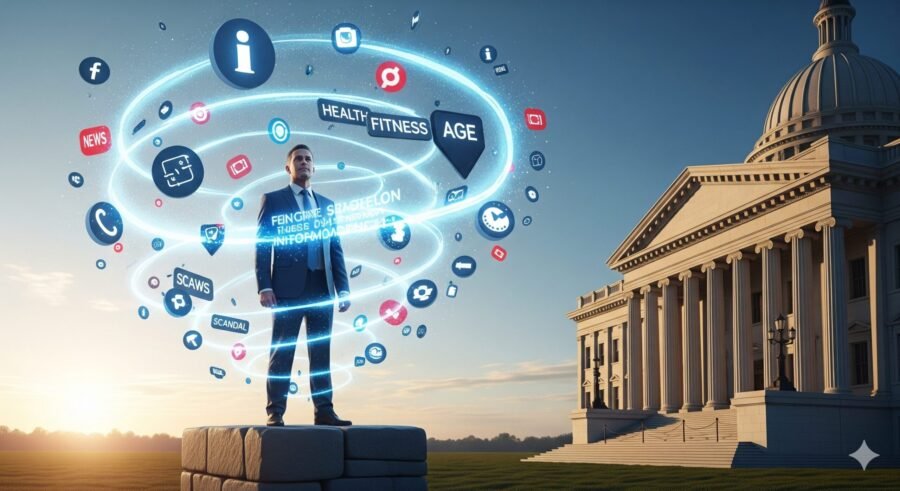
Love and Health: How the ‘Trump Is Dead’ Trend Sparks Concern and Constitutional Questions.
In today’s digital world, stories spread faster than facts. A striking example is the viral “Trump Is Dead” trend, which left people in shock and confusion. This was not just about politics—it was about how health, leadership, and public trust come together in uncertain times. While many believed it was only a rumor, the trend raised serious questions about how we process information, how we value health in leadership, and how the U.S. Constitution prepares for such emergencies. At its heart, this story is about love for democracy, the health of its leaders, and the resilience of a nation.
Understanding the Viral Trend: The Power of Words and Rumors
The “Trump Is Dead” hoax showed how easily rumors can overshadow facts. It wasn’t caused by one official statement but grew from scattered remarks, jokes, and online speculation. Once it hit social media, the trend spread faster than wildfire, proving how words can trigger emotions across millions of people. This also reflects how people naturally worry about the health of their leaders, since leadership directly impacts their future and well-being.
The Vice President’s Remark
The spark began with Vice President J.D. Vance’s interview, where he mentioned being prepared for “a terrible tragedy.” Though he immediately reassured that President Trump was in “excellent health,” people clipped only the first part, spreading it without context. This reminds us how incomplete information often leads to fear and doubt. It also underlines why clarity and careful communication are essential in politics.
The Simpsons Connection
When Matt Groening, creator of The Simpsons, made a lighthearted joke about leadership changes, the internet quickly linked it to Vance’s comment. Suddenly, humor mixed with rumor, creating a strange cocktail of conspiracy. This highlighted how pop culture can unintentionally fuel misinformation in today’s world.
Trump’s Health: What Is Real and What Is Rumor?
Donald Trump’s health has long been a subject of attention. According to official medical updates, he remains in “excellent cognitive and physical health.” Yet, reports about his diagnosis of chronic venous insufficiency (CVI) in July 2025 sparked renewed debates. CVI is common in older adults and causes swelling in the legs. While medically manageable, it fueled speculations about his stamina and ability to serve. This shows how even minor medical updates can become political lightning rods.
Photos showing bruises on his hands were quickly turned into viral rumors. The White House explained them as side effects of aspirin use and frequent handshakes. Still, speculation spread online, revealing a truth about our times: public trust in leadership often struggles against the storm of social media narratives.
The U.S. Constitution: Built for Stability
Behind all the noise lies a strong framework that ensures continuity of government. The 25th Amendment makes it clear: if a president dies, resigns, or is removed, the vice president immediately becomes president. This amendment, passed after President Kennedy’s assassination, ensures that the country never faces a leadership vacuum.
Succession in Detail
If both the president and vice president are unable to serve, the Presidential Succession Act of 1947 outlines the next in line: first the Speaker of the House, then the President pro tempore of the Senate, followed by Cabinet members. This legal order ensures that America’s leadership remains intact even in times of crisis.
Why Health and Leadership Matter Together
The connection between love and health is not limited to personal lives. National leadership depends heavily on the health of those in power. When leaders are healthy, citizens feel secure; when rumors suggest otherwise, uncertainty grows. Love for one’s country means caring not just about politics but also about the physical and mental fitness of those guiding it.
This also reminds us that public health, trust, and communication are deeply linked. When people feel informed with accurate updates, they feel respected and valued. This fosters a healthier democracy built on transparency and trust rather than fear.
Conclusion: Lessons for the Future
The “Trump Is Dead” hoax is more than just a rumor—it’s a lesson. It teaches us how important it is to verify information, to understand the difference between facts and fiction, and to rely on trusted sources. It also shows us that leadership is not just about policy—it’s about health, clarity, and public reassurance.
In the end, love for democracy and the health of its leaders go hand in hand. By strengthening truth, transparency, and trust, we build not only a stronger political system but also a healthier, more hopeful society.
For more insightful discussions about love, health, and the future of leadership, explore Love and Health Future. Our goal is to keep you informed with content that matters—because the health of leaders and the well-being of nations are always connected.
FAQ: Your Questions Answered
- Is the “Trump Is Dead” trend real?
No, it is a hoax. President Trump is alive as of August 2025. - Why did people believe it?
Because of Vice President Vance’s remarks and pop culture jokes that went viral. - What is CVI?
Chronic venous insufficiency is a condition where veins struggle to send blood back to the heart, common in older adults. - What does the Constitution say?
The 25th Amendment ensures the vice president takes over if the president dies or resigns. - Has this happened before?
Yes, eight U.S. presidents have died in office, showing why succession laws are so important.