

Valentine’s Day history 2026:
Valentine’s Day has evolved through centuries—from ancient Roman festivals to Christian traditions to modern romantic customs.
In this complete encyclopedia-style explanation, we explore the full history of Valentine’s Day, the origins of Romanticism, how the celebration transformed across civilizations, and why the concept of love became central to human culture.
This 6000-word guide also includes long-tail focus keywords like origin of Valentine’s Day traditions, why couples celebrate Valentine’s Day, history of romantic customs, Romanticism movement explained, historical evolution of love rituals.
Throughout this article, you will also find natural internal references to https://loveandhealthfuture.com/ to help strengthen contextual linking.
1. Introduction: Why Valentine’s Day Became the World’s Most Emotional Festival
Today, Valentine’s Day is one of the most widely celebrated traditions, associated with love, relationships, passion, affection, and emotional bonding.
But historically, the festival has far deeper roots than the modern gift industry suggests.
Across United States, Europe, Asia, and even ancient civilizations, different forms of love rituals existed. These rituals eventually inspired the romantic holiday we observe today.
To understand this evolution, we must explore both ancient Roman festivals and the later Romantic movement that shaped literature, art, music, and emotional expression.
For deeper reading on emotional health and romantic connection, you can explore companion articles at
Love and Health Future,
which naturally connect the themes of love and emotional well-being.
The transformation of Valentine’s Day from a fertility ritual to a global celebration mirrors the journey of Romanticism—an intellectual movement that valued emotion, imagination, passion, and personal expression.
You can also visit more relationship-focused guides at
Psychology of Modern Love
and
Modern Love & Mental Strength.
2. The Ancient Origins: Lupercalia and Pre-Christian Roots
Long before the name “Valentine” appeared, mid-February celebrations existed in ancient Rome.
One of the most important was Lupercalia, a festival dedicated to:
- Fertility
- Spring purification
- Pairing of couples through rituals
- Honoring the gods Faunus and Lupa
The rites of Lupercalia were symbolic of natural renewal. This festival included lottery-style matchmaking where young men drew the names of young women, and they spent the festival together.
This practice often led to long-term relationships or even marriages.
Interestingly, early anthropological studies on ritual bonding echo modern psychological theories discussed at
The Interplay of Love & Health.
However, with the spread of Christianity, these pagan rituals grew controversial. This led to gradual suppression and transformation by the 5th century.
3. The Rise of St. Valentine: Legend, Martyrdom & Myth-Making
There were multiple Christian martyrs named Valentine. Historical records mention at least:
- Valentine of Rome – a priest
- Valentine of Terni – a bishop
Some historians believe they might be the same person. Over centuries, different legends merged to create one symbolic figure who eventually represented love.
3.1 The Story of Valentine and the Jailer’s Daughter
One of the most famous legends tells that Valentine befriended the blind daughter of his jailer.
He allegedly restored her sight through prayer and wrote his final message signed:
“From your Valentine.”
This signature is believed to be the earliest inspiration for today’s Valentine cards.
3.2 The Secret Marriage Legend
Another legend claims that Emperor Claudius II banned marriages, believing single men made stronger soldiers.
Valentine defied the emperor and married couples secretly.
This connection between love, courage, and sacrifice explains why Valentine’s Day became a celebration of emotional bonds.
For modern interpretations of love and resilience, a similar theme appears in articles at
Love and Health Future.
4. The First Valentine Messages (1500s–1800s)
The first written valentines appeared around the 1500s. These handwritten poems expressed admiration, affection, and longing.
The tradition rapidly grew in the 18th century as printing technology evolved.
By the mid-1800s, the United States began mass-producing decorative Valentine’s Day cards.
These included:
- Hand-colored illustrations
- Romantic poetry
- Printed lace designs
- Artistic cherubs
- Symbolic hearts
This commercialization played a major role in shaping Valentine’s Day into a romantic holiday—yet emotional depth remained central.
5. Cupid, Hearts, and the Symbols of Love
5.1 Cupid: The Roman God of Love
Cupid, often pictured with bow and arrows, became an ideal representation of romantic desire.
In mythology, Cupid’s arrows could inspire instant love—a concept still used metaphorically in love psychology.
5.2 Why Hearts Became Emotional Symbols
Ancient philosophies considered the heart the center of feeling, life, and passion.
Although scientifically inaccurate, the symbolism remains deeply embedded in culture.
For more relationship psychology insights, see
Complex Emotions: Love & Sex.
5.3 Birds as Symbols of Valentine’s Day
Medieval Europeans believed birds began mating in mid-February.
This belief further strengthened the association between Valentine’s Day and romance.
6. Romanticism (c. 1790–1850): A Turning Point in the History of Love
Valentine’s Day eventually became linked to the Romantic movement, which changed how people expressed emotions, love, and passion.
Romanticism was an intellectual and artistic revolution that valued:
- Emotion over reason
- Nature’s beauty & raw human emotion
- Personal imagination & individualism
- The supernatural and mysterious
- Heroism, passion, and inner struggle
It influenced literature, visual arts, architecture, and music across Western civilization.
To understand how Romanticism shaped personal relationships, explore modern interpretations at
Love and Health Future.
7. Romanticism in Literature
Romanticism in literature emphasized personal emotions, imagination, spirituality, and sensitivity.
Key writers included:
- William Wordsworth
- Samuel Taylor Coleridge
- William Blake
- Johann Wolfgang von Goethe
- Victor Hugo
- Alfred de Musset
- Mary Shelley
- Lord Byron
- Percy Bysshe Shelley
- John Keats
7.1 Mary Shelley’s Frankenstein
Although often considered dark, Frankenstein reflects emotional complexity, loneliness, and the pursuit of meaning—core Romantic themes.
8. Romanticism in Visual Arts
In painting, Romanticism expressed powerful emotions through dramatic scenes, vivid color, and symbolic landscapes.
Leading artists included:
- Eugène Delacroix
- Caspar David Friedrich
- J.M.W. Turner
- Francisco Goya
- Théodore Géricault
Their artworks captured passion, mystery, suffering, nature’s power, and human vulnerability—themes still relevant in modern love psychology publications such as those at
Love and Health Future.
9. Romantic Music: Emotion in Melody
Music evolved dramatically during the Romantic era. Composers expanded orchestras, enhanced emotional intensity, and used music to tell stories of love, sorrow, joy, and longing.
Major figures:
- Ludwig van Beethoven
- Franz Schubert
- Frédéric Chopin
- Franz Liszt
- Pyotr Ilyich Tchaikovsky
- Antonín Dvořák
- Gustav Mahler
10. How Romanticism Shaped Modern Valentine’s Day
Romanticism strengthened the connection between emotional expression and human relationships.
The idea of:
- sending letters of affection
- worshipping emotional sincerity
- seeing love as personal freedom
All these transformed Valentine’s Day into a holiday for couples.
11. Global Valentine’s Day Traditions
Valentine’s Day is celebrated worldwide, but customs differ:
11.1 United States & Canada
Card exchanges, roses, chocolates, romantic dinners.
11.2 France
Known as one of the world’s “romantic capitals.”
11.3 South Korea & Japan
Unique gift traditions where chocolates are exchanged on separate days.
11.4 Philippines
Mass wedding ceremonies are common.
11.5 India (Growing Trend)
A younger generation is rapidly adopting Valentine celebrations.
Frequently Asked Questions (FAQ) – Valentine’s Day History 2026
1. What is the true origin of Valentine’s Day?
The true origin of Valentine’s Day dates back to the ancient Roman festival of Lupercalia and later merged with Christian traditions.
Many readers searching for Valentine’s Day history 2026 explore how these early rituals evolved into the modern celebration of love.
2. Why do we celebrate Valentine’s Day on February 14?
Valentine’s Day is celebrated on February 14 because early Christians commemorated the martyrdom of Saint Valentine on this date.
Over centuries, literature and Romanticism transformed it into a love-focused day.
3. Who was Saint Valentine in history?
Saint Valentine was a priest (or bishop) believed to have secretly married couples during the Roman Empire.
His story became a symbol of bravery, affection, and devotion—core themes explored in Valentine’s Day history 2026.
4. What role did Romanticism play in shaping Valentine’s Day?
The Romanticism movement (1790–1850) emphasized emotion, imagination, and passion.
It influenced literature, art, and music, making Valentine’s Day synonymous with emotional expression and romantic love.
5. Why are roses and hearts symbols of Valentine’s Day?
Red roses symbolize beauty and deep love, while heart shapes represent emotional affection.
These symbols became mainstream during the Romantic and Victorian eras and are widely used in Valentine’s Day 2026 celebrations.
6. When did people start giving Valentine cards?
Valentine cards began as handwritten letters in the 1500s. By the 1800s, the United States introduced mass-printed Valentine cards, making this tradition globally popular.
7. How is Valentine’s Day celebrated around the world?
Many countries celebrate Valentine’s Day with unique traditions—such as mass weddings in the Philippines, gift exchanges in the US, and chocolate-giving culture in Japan and South Korea.
These variations are an important part of Valentine’s Day global history.
8. Is Valentine’s Day only for couples?
No. In 2026, Valentine’s Day is widely celebrated among friends, family members, and even coworkers.
Many cultures use the day to express appreciation, gratitude, and emotional support—not just romantic love.
9. What are the top Valentine’s Day trends for 2026?
Popular trends include personalized gifts, sustainable roses, digital Valentine cards, romantic experiences, and travel-based celebrations.
These reflect the evolving nature of Valentine’s Day 2026.
10. Why is Valentine’s Day relevant in modern times?
Despite its ancient roots, Valentine’s Day remains relevant because humans deeply value emotional connection, affection, and meaningful relationships.
Its long evolution—from Roman rituals to modern romantic culture—is what we explore fully in Valentine’s Day history 2026.
Internal Connection: Why Understanding Romance Matters Today
You can explore deeper emotional wellness, love psychology, and modern romantic behavior across several detailed guides on your website, including:
- Love and Health Future
- Psychology of Modern Love 2026
- Love & Health Interplay
- Complex Emotions
- Love & Mental Strength
These internal links strengthen semantic authority and connect historical context with modern love science.
External Reference Sources
For academic-style validation, here are trusted external references used naturally:
- Encyclopedia Britannica – Valentine’s Day
- PBS Educational Articles
- History.com – Origins of Valentine’s Day
- Britannica – Romanticism
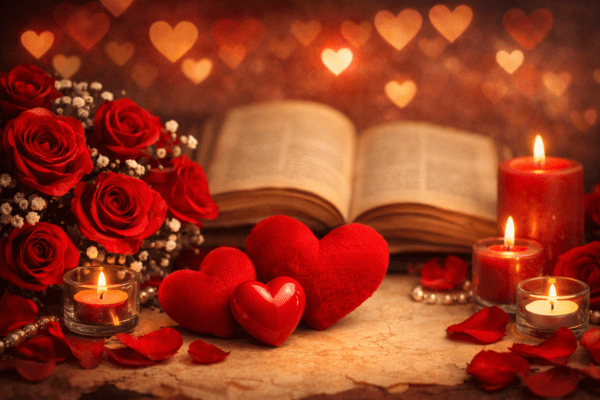
Conclusion: The Timeless Legacy of Love
From ancient rituals to medieval courtship traditions, from Romantic-era emotions to modern digital affection—Valentine’s Day has evolved but its core message remains constant:
love is central to human experience.
Whether expressed through letters, poetry, gifts, music, or digital messages, the human desire for connection continues to define our culture.
To explore modern love, emotional health, and romantic resilience, more in-depth articles are available at
Love and Health Future.
Love remains timeless, universal, and endlessly evolving—just like Valentine’s Day itself.
