

For decades, the phrase “man up” has silenced millions of voices. But as we step into 2026, the conversation is shifting. While more men are speaking out, the data tells a sobering story. Understanding men’s mental health statistics in the US in 2026 is no longer just about numbers; it’s about saving lives in a fast-paced, digital, and economically complex world.
In this comprehensive guide, we dive deep into the latest trends, the impact of technology like AI on wellness, and why American men are still struggling to find the help they need.
The State of Men’s Mental Health in the US 2026
As of 2026, mental health has become a top priority for Americans. According to the American Psychiatric Association, nearly 38% of adults made mental health-related resolutions this year. However, men continue to face unique barriers. Despite the growing awareness, nearly 1 in 5 men in the US experience a mental health condition like anxiety or depression annually.
Key Trends Shaping 2026
- The Rise of Digital Therapy: Over 60% of men seeking help now prefer telehealth and AI-powered mental health tools.
- Economic Stress: Financial instability remains the #1 trigger for anxiety among American men.
- Younger Generations Leading Change: Gen Z and Millennial men are 40% more likely to seek therapy compared to Boomers.
Detailed Men’s Mental Health Statistics in the US 2026
To understand the gravity of the situation, let’s look at the hard data. The following table highlights the prevalence of mental health issues among men in the United States based on current projections and recent studies.
Statistical Overview: Men vs. Women (2026 Projections)
| Metric | Men (Estimated %) | Women (Estimated %) |
|---|---|---|
| Any Mental Illness (AMI) | ~19. | ~26. |
| Regular Feelings of Anxiety | 13.5% | 18.2% |
| Suicide Mortality Rate | 76% of all cases | 24% of all cases |
| Treatment Seeking Rate | ~38% | ~52% |
Source: Projections based on CDC and NIMH historical data trends for 2026.
The “Gender Paradox” in Suicide Rates
One of the most tragic men’s mental health statistics in the US in 2026 is the suicide gap. While women are more likely to report suicidal thoughts and attempt suicide, men are 3.5 to 4 times more likely to die by suicide.
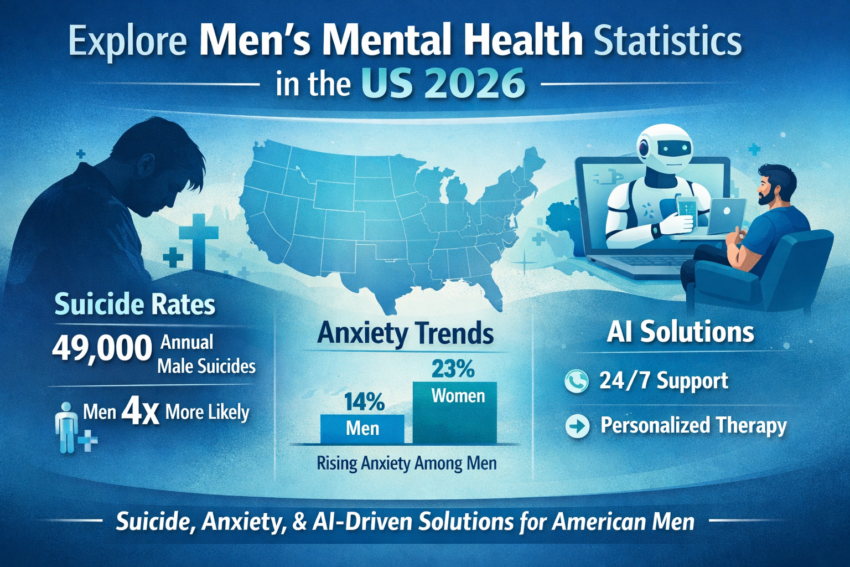
Understanding the “Gender Paradox” in 2026
The term “gender paradox” describes a heartbreaking reality: while women are diagnosed with depression at higher rates, men die by suicide far more frequently. In 2026, this gap remains a critical public health challenge in the US. One primary driver is the “Silent Crisis”—men are socially conditioned to mask emotional pain with stoicism, leading many to suffer in total isolation until they reach a breaking point.
Furthermore, the “Communication Barrier” plays a significant role. Statistical data shows that men are less likely to utilize verbal emotional outlets. Instead of “feeling sad,” many American men experience “male-type depression,” characterized by high-risk behaviors, substance abuse, and sudden outbursts of anger. This often results in their underlying mental health struggles being misdiagnosed or ignored by friends and family.
Access to specialized care is another factor. In 2026, although telehealth has expanded, there is still a shortage of male-focused mental health programs that address the unique “provider-identity” stress. Many men feel that traditional therapy is “not built for them,” leading to a 45% higher drop-out rate in counseling compared to women. To close this suicide gap, experts emphasize the need for “side-by-side” communication—engaging men in activities while talking, which has proven more effective than traditional face-to-face clinical settings.
Lastly, the 2026 data highlights that unemployment and workplace displacement due to rapid AI integration have hit traditional male-dominated sectors hard. This loss of professional identity is directly correlated with a spike in “deaths of despair.” Addressing the gender paradox requires more than just awareness; it requires a structural shift in how the US healthcare system validates and treats the specific pressures of modern American manhood.
Why the Disparity?
Experts point to several factors:
- Lethality of Methods: Men often use more immediate and lethal means.
- Delayed Help-Seeking: Many men only seek help when they are in a state of acute crisis.
- Social Isolation: Men over 65 have the highest suicide rates, often linked to loneliness and loss of “provider” identity.
Economic Anxiety and Manhood
In 2026, the definition of “being a man” is still heavily tied to being a provider. A study by Equimundo revealed that 86% of men still feel the pressure to be the primary breadwinner. When inflation or job insecurity hits, the psychological toll is immense. Men experiencing severe economic insecurity are significantly more likely to report suicidal ideation.
The Digital Revolution in Men’s Wellness
In 2026, technology is bridge-building where traditional therapy once failed. AI-driven mental health platforms now offer American men a sense of “anonymous strength,” allowing them to seek help without the perceived judgment of a face-to-face clinical setting. These AI companions use natural language processing to detect early warning signs of burnout or depression through a user’s text patterns or voice tone, providing immediate, data-backed interventions. For many men, interacting with a digital interface feels like a “technical diagnostic” rather than an emotional vulnerability, which significantly lowers the barrier to entry for consistent mental health maintenance.
Beyond software, wearable technology has transformed from simple step counters into advanced biological monitors. Modern smartwatches in 2026 can now track heart rate variability (HRV) and cortisol levels in real-time, alerting the user to rising stress levels before they escalate into a panic attack. This “objective data” approach resonates deeply with men who prefer logical, measurable evidence of their well-being. By integrating these biometrics with professional care, therapists can now see a 24/7 picture of a patient’s physiological health, making the treatment for men’s mental health statistics in the US in 2026 more precise, proactive, and personalized than ever before.
Modern Solutions: The Role of AI and Wearable Tech
The good news? 2026 is seeing a revolution in how we treat mental health.
- AI Diagnostics: New apps can now analyze speech patterns and biometric data to flag early signs of depression.
- Wearable Mood Trackers: Smartwatches are now being used to monitor cortisol levels and stress in real-time.
- Continuous Care Models: Moving away from “one hour a week” therapy to 24/7 digital support.
Frequently Asked Questions (FAQ)
1. What are the common signs of depression in men?
Men often mask depression with “active” symptoms. Instead of sadness, they might display anger, irritability, or reckless behavior. Physical symptoms like unexplained back pain or headaches are also common.
2. Are men seeking more help in 2026?
Yes. Due to social media campaigns and celebrity advocacy, the stigma is slowly fading. Telehealth has played a massive role, as it offers a level of privacy that traditional clinics might not.
3. How can I support a man in my life?
Listen without judgment. Encourage them to view mental health as a tool for “peak performance” rather than a sign of weakness. Sometimes, suggesting a “check-up” with a doctor is an easier first step than suggesting a therapist.
Hello caretakers of fur-filled households !
When it comes to removing pet hair and allergens, an air purifier is your best ally. [url=http://bestairpurifierforpets.vercel.app/][/url]. Many models come with specialized filters tailored for pet owners. This means you can breathe easy knowing your air is free from harmful particles.
When adding a good air purifier for pets to your home, consider aesthetics as well as performance. Many modern purifiers are designed to be sleek and unobtrusive, blending in seamlessly with your home decor. This style and functionality combination can enhance the overall ambiance of your space.
Must-Have Features of the Best Air Purifier for Pets – п»їhttps://bestairpurifierforpets.vercel.app/
May you enjoy incredible breaths of fresh air !