
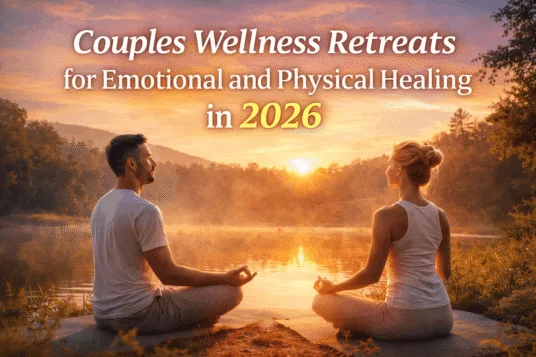
Beyond the Spa: The Rise of Couples Wellness Retreats for Emotional and Physical Healing in 2026
In 2026, relationships are facing new challenges. Digital overload, work stress, and constant connectivity are silently damaging emotional intimacy. Couples are realizing that traditional vacations are no longer enough. Instead, structured couples wellness retreats for emotional and physical healing are becoming a powerful way to reset emotional connection, rebuild trust, and restore balance.
These retreats combine neuroscience, psychology, nutrition, and mindfulness practices to help couples reconnect deeply. Instead of temporary relaxation, they focus on long-term transformation of emotional patterns and communication habits.
Research from Psychology Today suggests that shared healing experiences strengthen relationship satisfaction significantly. Couples who attend structured retreats report stronger communication and emotional resilience.
Interestingly, wellness retreats are no longer limited to luxury spas. Modern programs combine biohacking tools, emotional therapy, and nature immersion to create deep relational healing.

The Science Behind Relationship Healing
Modern neuroscience shows that emotional stress affects physical health. When couples experience prolonged conflict, cortisol levels increase and the nervous system stays in a fight-or-flight state. Over time this weakens communication and emotional bonding.
Couples wellness retreats for emotional and physical healing address this issue by helping partners regulate their nervous systems together. Through breathing exercises, somatic therapy, and guided mindfulness practices, couples learn how to stay emotionally grounded even during stressful situations.
You can also explore related insights on relationship health in our guide on
Gut Health and Longevity.
Why Digital Detox Is Essential
Many relationship experts believe smartphones are one of the biggest threats to intimacy. Constant notifications interrupt meaningful conversations and reduce emotional presence.
Wellness retreats introduce structured digital detox practices. Couples spend several days without phones or social media, allowing them to reconnect without distractions.
If you want to improve mental clarity and focus, check our guide on
Intermittent Fasting Benefits.
Nutrition and Emotional Health
Food has a powerful effect on emotional stability. Diets rich in omega-3 fats, magnesium, and probiotics support brain health and emotional balance.
Many retreats now offer anti-inflammatory meal plans that improve both physical and emotional wellbeing.
Learn more about healthy nutrition in our article on
Protein Rich Diet Plan.
The Role of Nature in Healing
Nature immersion plays an important role in emotional healing. Forest walks, meditation near water, and mindful outdoor activities help couples reconnect with themselves and each other.
According to studies published by Harvard Health, spending time in nature significantly reduces stress hormones and improves emotional wellbeing.
Explore more lifestyle wellness tips here:
Healthy Lifestyle Tips
Additional Relationship Growth Strategies
One of the biggest benefits of couples wellness retreats is the opportunity to learn new communication tools. Many retreats include guided relationship coaching sessions where couples practice empathy-based communication.
Another important aspect is learning emotional awareness. Couples often discover hidden stress patterns that influence their reactions. Once these patterns become visible, they can be changed through conscious practice.
Retreat programs also emphasize physical wellbeing through yoga, breathwork, and mindful movement. These practices improve energy levels and emotional stability.
Many couples report that the retreat experience acts as a powerful reset point in their relationship journey. It allows them to reconnect with the reasons they first fell in love.
If you want to explore healthy food ideas for emotional balance, read our guide on
High Fiber Recipes for Wellness.
FAQ: Couples Wellness Retreats
1. What are couples wellness retreats?
They are structured programs that help couples improve emotional and physical wellbeing through therapy, mindfulness, and wellness activities.
2. Are these retreats only for couples with problems?
No. Many healthy couples attend retreats to deepen their emotional connection.
3. How long do retreats usually last?
Most retreats last between 3 to 7 days depending on the program.
4. Are wellness retreats expensive?
Prices vary from $2000 to $10,000 depending on location and services.
5. Do retreats include therapy sessions?
Yes, many programs include guided therapy and relationship coaching.
6. Are wellness retreats scientifically supported?
Studies from NCBI show mindfulness and emotional therapy improve relationship satisfaction.
7. Can these retreats improve communication?
Yes. Most retreats teach practical communication techniques.
8. What activities are included?
Yoga, meditation, nature walks, therapy sessions, and nutrition workshops.
9. Are retreats private?
Many retreats offer private sessions while others include group workshops.
10. Are these retreats suitable for newly married couples?
Yes. They are excellent for building strong relationship foundations.
Future of Relationship Wellness in 2026
The global wellness industry is evolving rapidly. Relationship wellness is now becoming one of the fastest growing segments in the wellness economy. Couples are no longer waiting until problems appear before seeking help.
Instead, many partners are proactively investing in emotional growth experiences that strengthen communication, empathy, and emotional safety. Couples wellness retreats for emotional and physical healing are designed to create these powerful transformation environments.
Another emerging trend is the integration of neuroscience with relationship coaching. Many retreats now use biometric tools to measure stress levels, sleep quality, and emotional responses. This scientific approach helps couples understand their emotional patterns more clearly.
Experts believe that emotional awareness will become one of the most valuable relationship skills in the future. When couples learn to identify their emotional triggers, they can respond more calmly and compassionately.
Another major benefit of these retreats is the opportunity to step away from everyday distractions. Without the pressure of work schedules and digital notifications, couples can reconnect with deeper conversations and shared experiences.
Many retreat participants say the experience feels like rediscovering their relationship from the beginning. Small moments like walking in nature together, sharing meals mindfully, and practicing gratitude exercises help rebuild emotional intimacy.
Relationship experts also highlight the importance of post-retreat integration. Couples are encouraged to continue daily practices such as mindful listening, appreciation rituals, and stress regulation exercises.
These small habits help maintain the emotional connection built during the retreat. Over time they create a stronger foundation for long-term relationship satisfaction.
As awareness about emotional health continues to grow, couples wellness retreats are expected to become a mainstream relationship investment rather than a luxury experience.
For couples seeking deeper emotional connection, these retreats provide a powerful opportunity to reset, heal, and rediscover the strength of their partnership.
Conclusion
The popularity of couples wellness retreats for emotional and physical healing reflects a major shift in how people approach relationships in 2026. Couples are beginning to treat emotional health with the same seriousness as physical health.
Instead of waiting for problems to escalate, more couples are proactively investing in their relationship wellbeing. Wellness retreats offer a structured environment where partners can reconnect, heal emotional wounds, and rebuild trust.
As modern life becomes increasingly stressful, experiences that promote emotional connection will become even more valuable. Investing in relationship wellness today may lead to stronger, healthier partnerships for years to come.